Artist Conversation #2

Artist: Kelsey Steuernagel

Exhibition: The Enchanted Borckerlans

Media: Digital

Gallery: Dr. Maxine Merlino Gallery

Website: https://www.ricardocoronaart.com (Kelsey’s art partner)

Instagram: ricardocoronaart
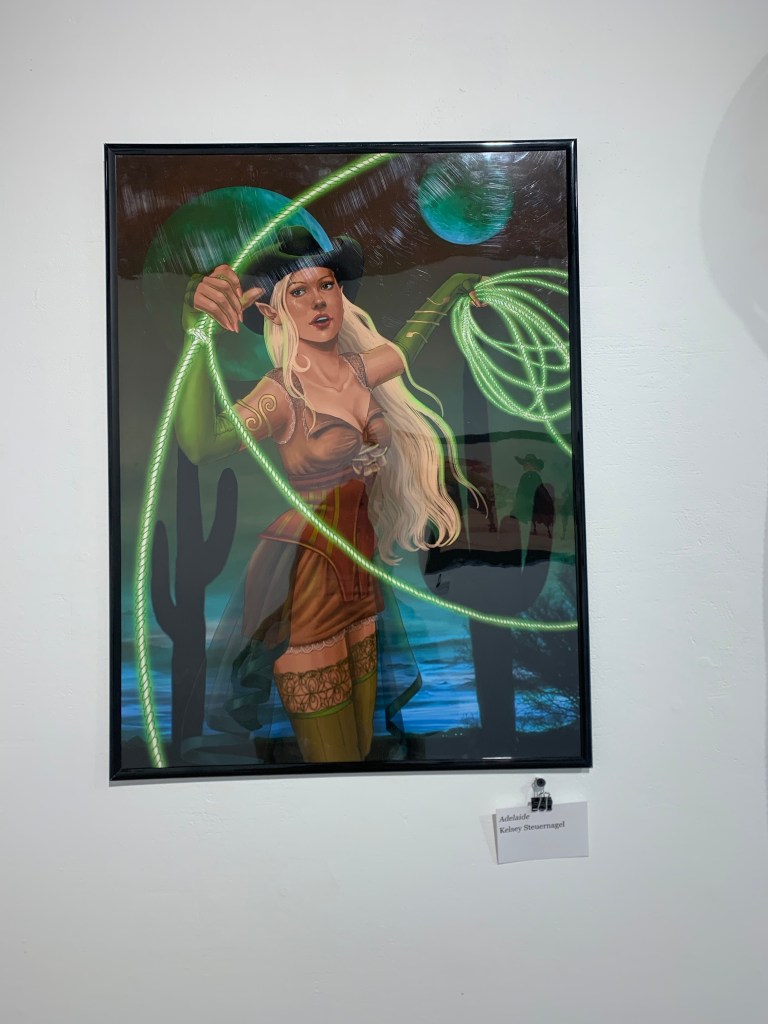
  1. Kelsey Steuernagel is an undergraduate student as CSULB. She is a student in the School of Arts Preproduction program. She is an undergrad and working towards her BFA in Preproduction. While interviewing Kelsey, I discovered that her interests are drawing, creating, world building, concepts, and art as a whole. When I asked her what ideas she likes to explore, she said she likes converging fantasy and westerns themes together, which then leads her to create a story.
  2. After looking at Kelsey’s art, I first started to look at the form. Her piece is in a medium sized frame. There was a distinct design in her digital work, and it was easy to tell exactly what she created. There was only one part of her work that was brightly colored, and that was the green neon rope. The other colors were either dark or a bit lighter. There are some straight and jaded lines. For example, the cactus is the back has some straight lines, but the girl’s clothes has some jagged lines. Most of Kelsey’s work has vivid primary colors. Her piece of work is a pretty good size. You don’t have to stand super close or very far to see it.
  3. I was able to ask Kelsey a couple more questions and got more insight on her thought process while creating her pieces of art. She said her pieces are about trying to harness enchanted minerals, and creating an adventure story through visual development work. While creating her pieces, she said she thinks about the color palette, shapes, the line quality, and making sure there is a cohesive story. In the gallery that Kelsey’s piece was in, it was a collaboration with other artists. Each piece in the gallery had the same neon green color, which created a story that there was an enchanted mineral trying to be found. In the artist statement found in the gallery, it says, “Ou story is about greed, and begins much like many Western tales: strangers in a strange land, stumbling upon opportunity and those willing to steal it.”
  4. I really enjoyed looking at this exhibit and Kelsey’s work. You can tell she is very passionate about what she creates. When I first saw her piece, it was easier to understand what it was about, and then she showed me the other artists work and how it creates a story. I was really intrigued with the way all the pieces told a story. Personally, I am not into fantasy stories, so it was interesting being able to look at a piece of art that I normally wouldn’t look at. I would definitely recommend to someone to visit Kelsey Steuernagel’s artwork.
Wk 4- Cameras Tell Stories

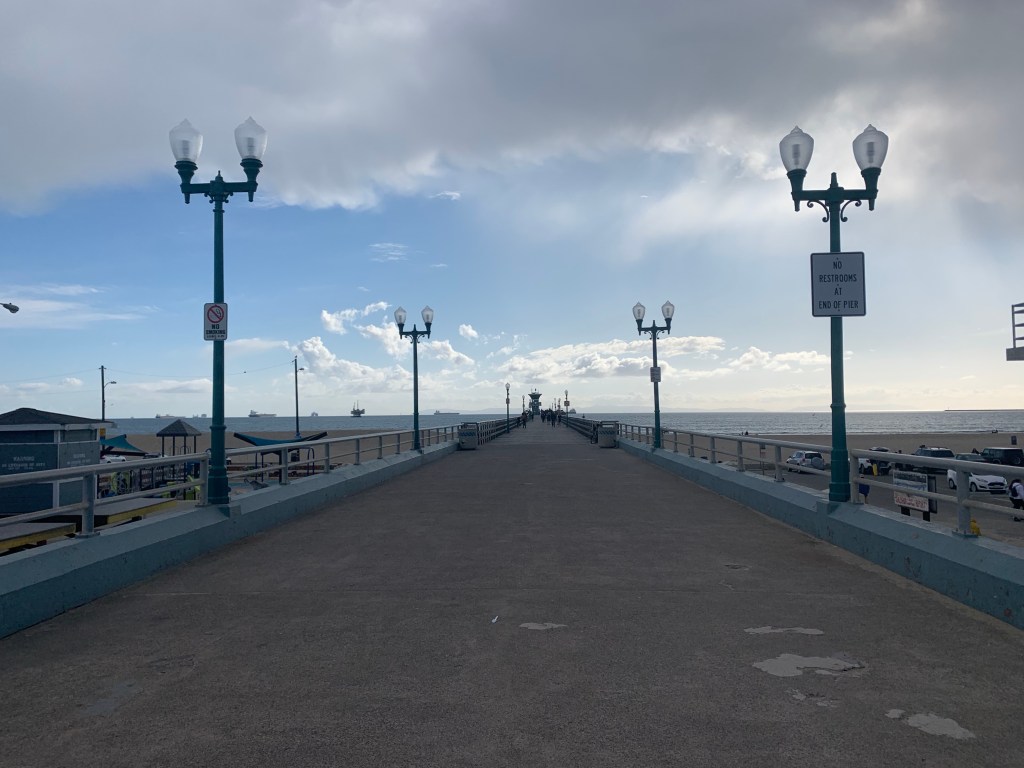
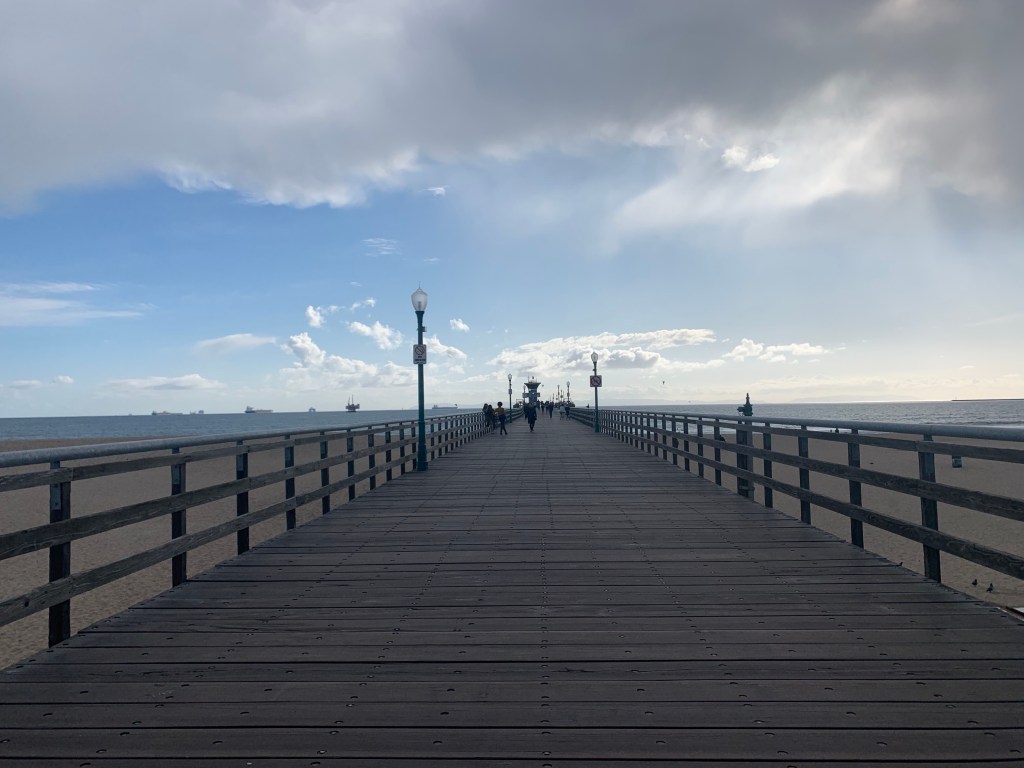
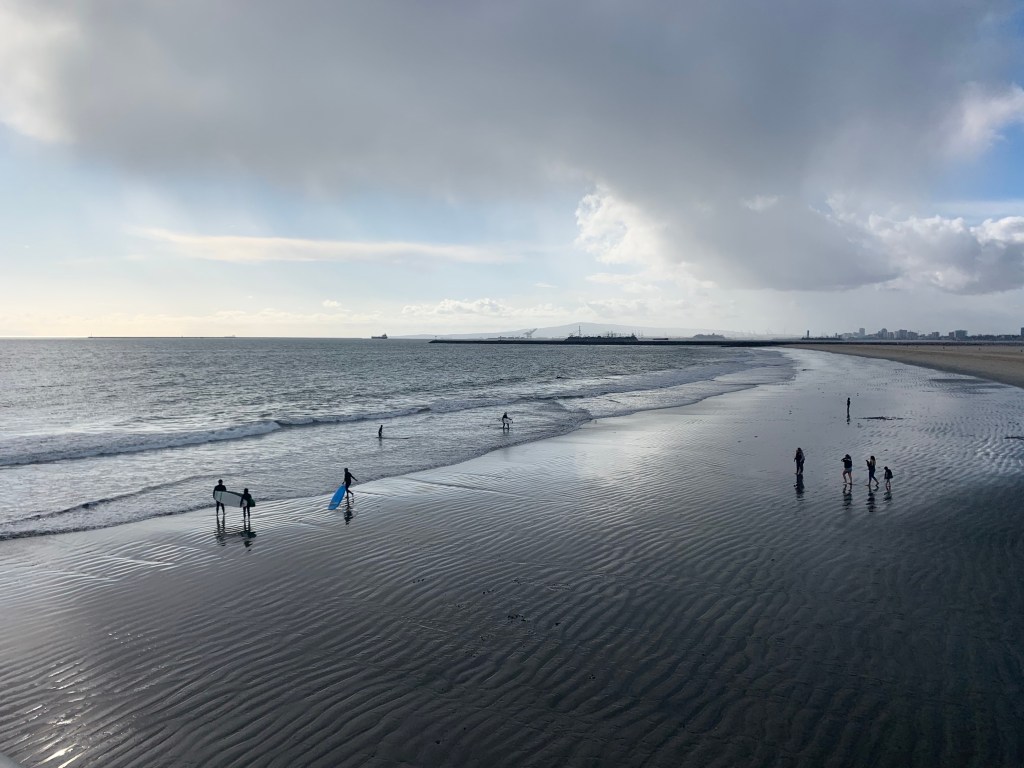
This is Seal Beach, California. I grew up in California and beaches are always something that have been apart of my life. As you can see, even though it was a gloomy day, people still were out and about at the beach. This is the north side of the pier, and many people tend to surf and hang out on this side of the beach.
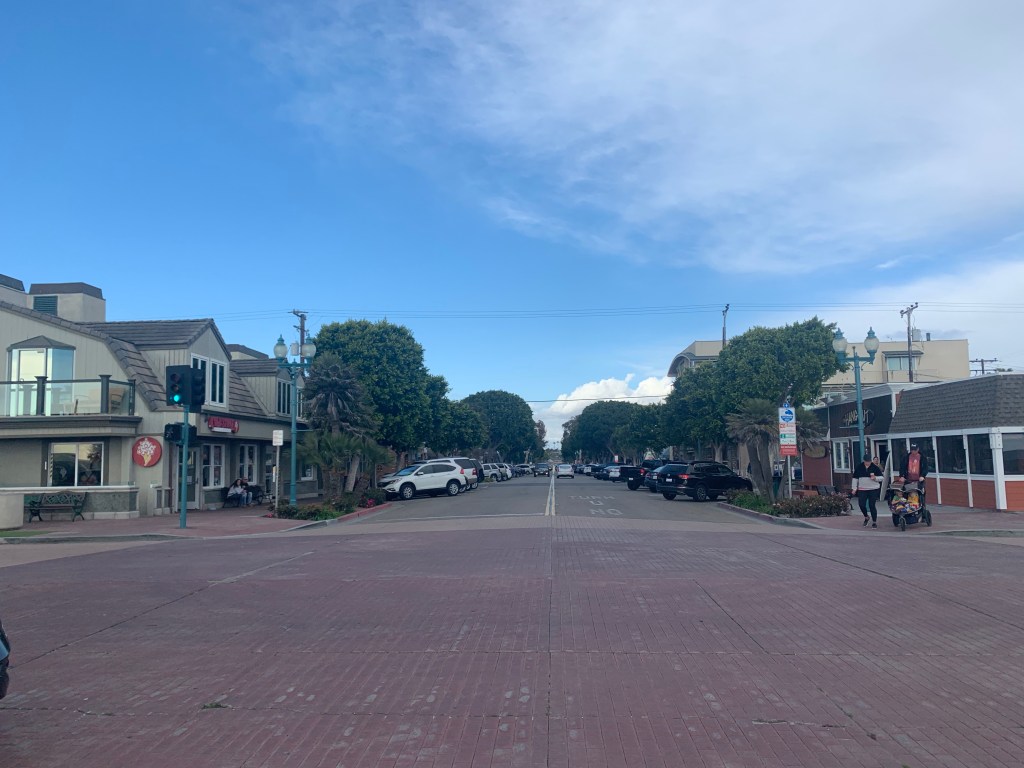
Main Street in Seal Beach is definitely a very popular place that many come to. They walk around, and have many different restaurants and dessert places to choose from. There are also small shops that people like to shop at. It’s important that as a community we take care of this street and appreciate everyone who works in the restaurants and shops.
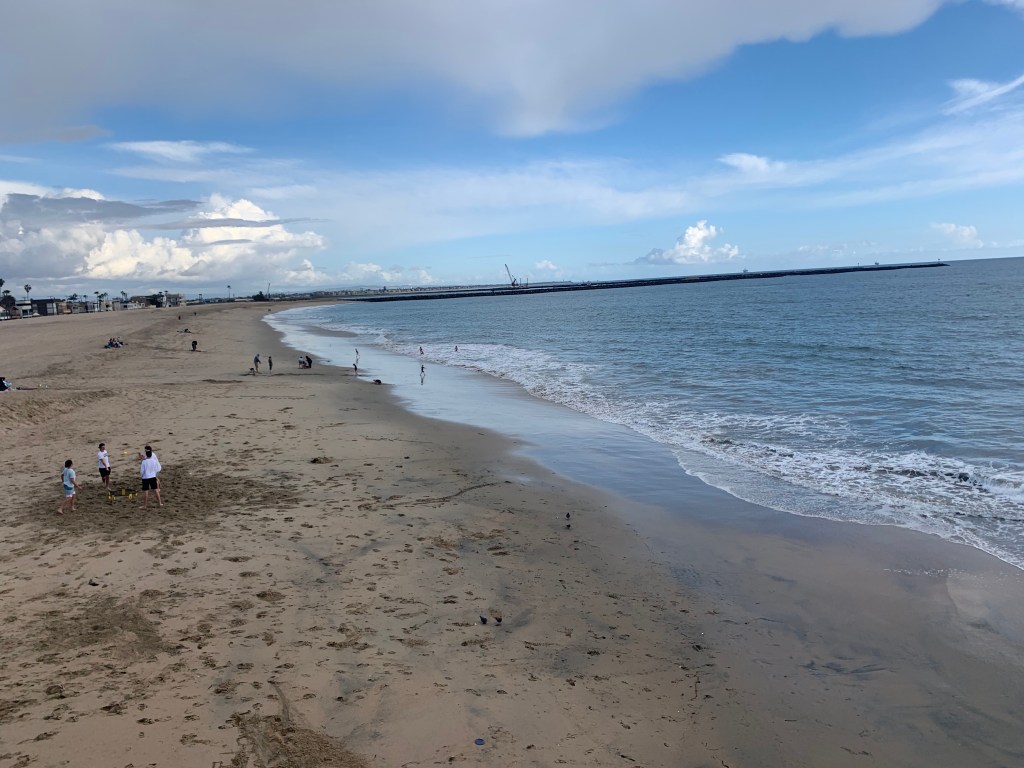
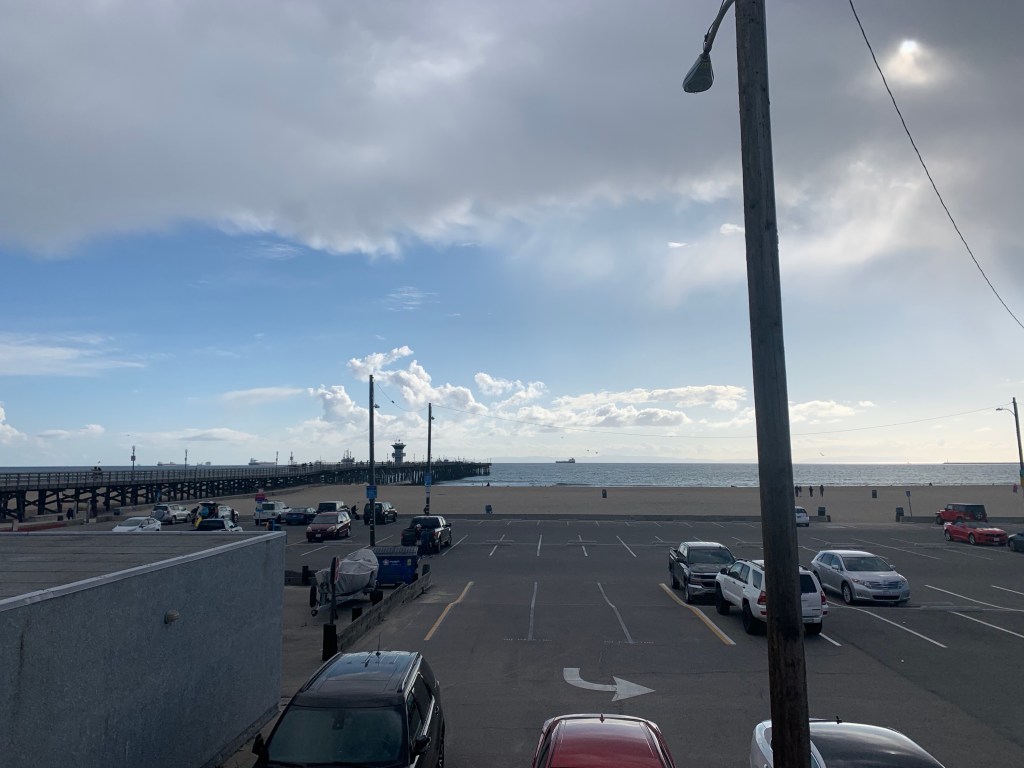
This is the south side of the pier. Many people come to this side of the beach as well. Keeping both side of the beach clean is very important because although the pier is dividing the beach into two sides, it’s still all one beach. I would suggest participating in a beach clean up ever so often. It’s a great way to keep our beaches clean. When we have clean beaches, people are able to enjoy their time at Seal Beach.
  1. I chose to tell a story about Seal Beach because it’s a place I have been going to for most of my life. Being from California and growing up in Long Beach, beaches and the oceans are a place where I enjoy going too. I wanted to share the importance of keeping our beaches clean.
  2. I think I did a good job at portraying the beauty of Seal Beach and showing that many people come here to walk on the pier and on Main Street. In my pictures, I was able to get a good view from where I was standing.
  3. I think the image that best represents my story is the first picture. In the picture, it was a really gloomy day and almost started raining. But despite the weather, people still came to the beach and enjoyed their day. This made me realize that many people really do appreciate beaches. And then I started thinking about the importance of keeping our beaches clean so no matter the weather or the day, people can always feel like they have a clean beach to come to.
  4. I don’t think my second picture, the one with the parking lot, is “great”. But I wanted to add it because where I stood to take that picture is spot where people like to sit on benches at look at the ocean. The picture helps me tell my story because it allowed me to show people the different views that people get from sitting at different spots at the beach or on the grass areas around it.
  5. Next time, I would take pictures closer to the water and of surfers. I also wish I went to the very end of the pier.
  6. If I had to do another photo series, I would like to tell a story about animal shelters, adopting dogs, and how abusing animals is a terrible thing.

Wk 3- Drawing is Language

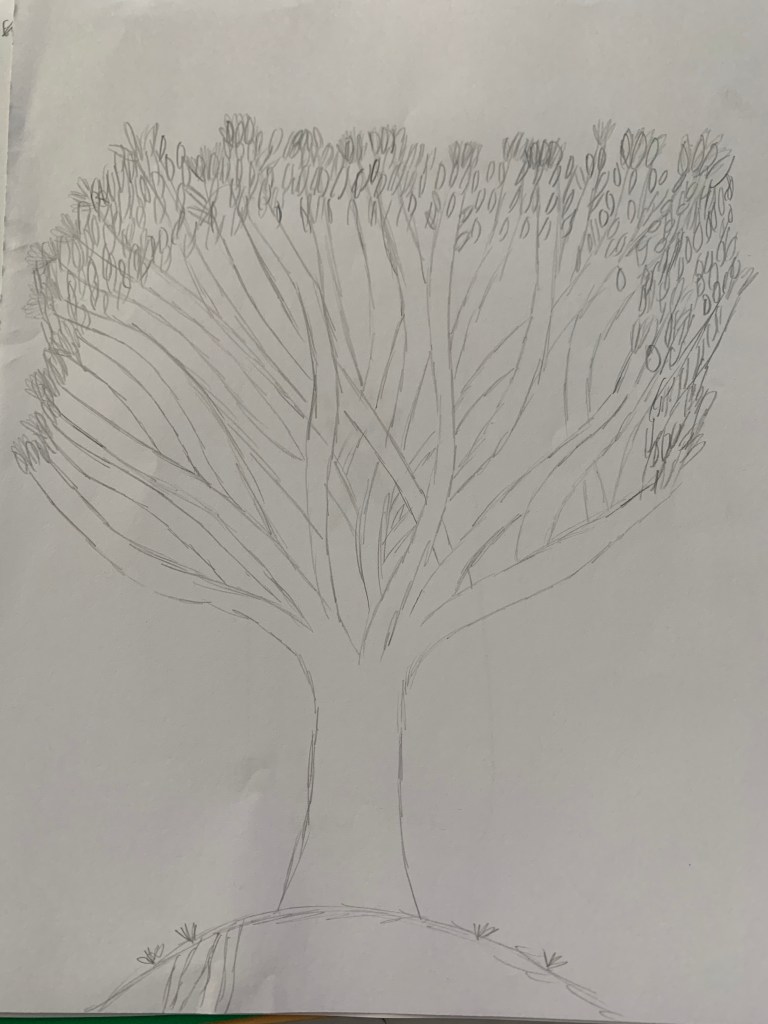
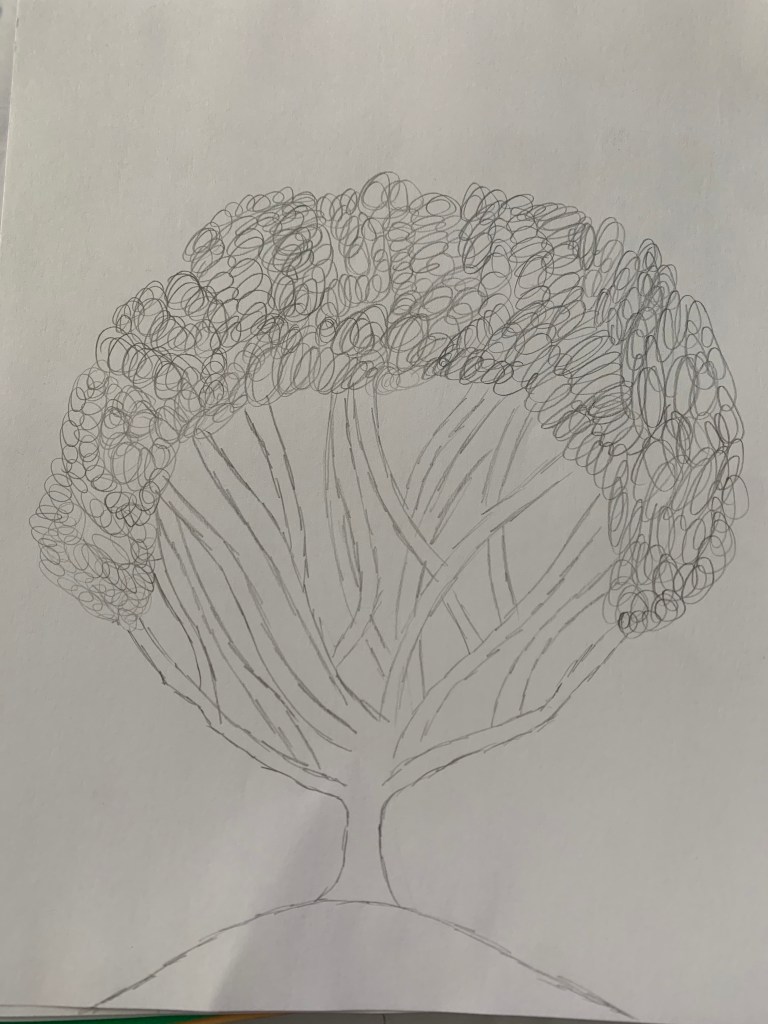
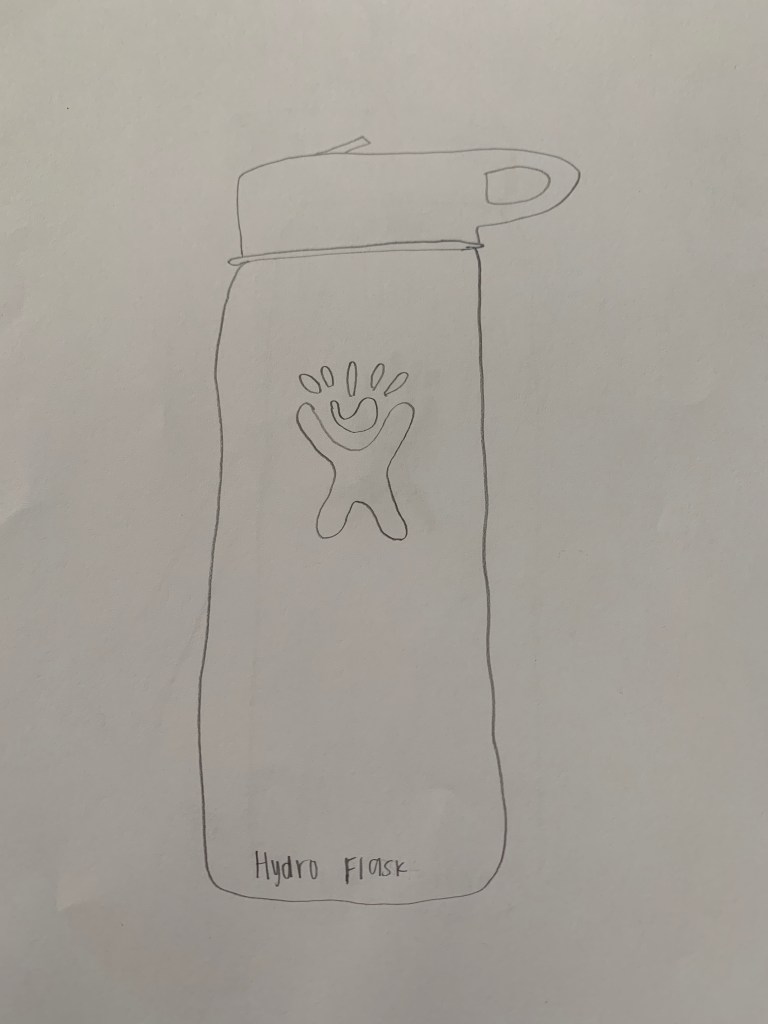
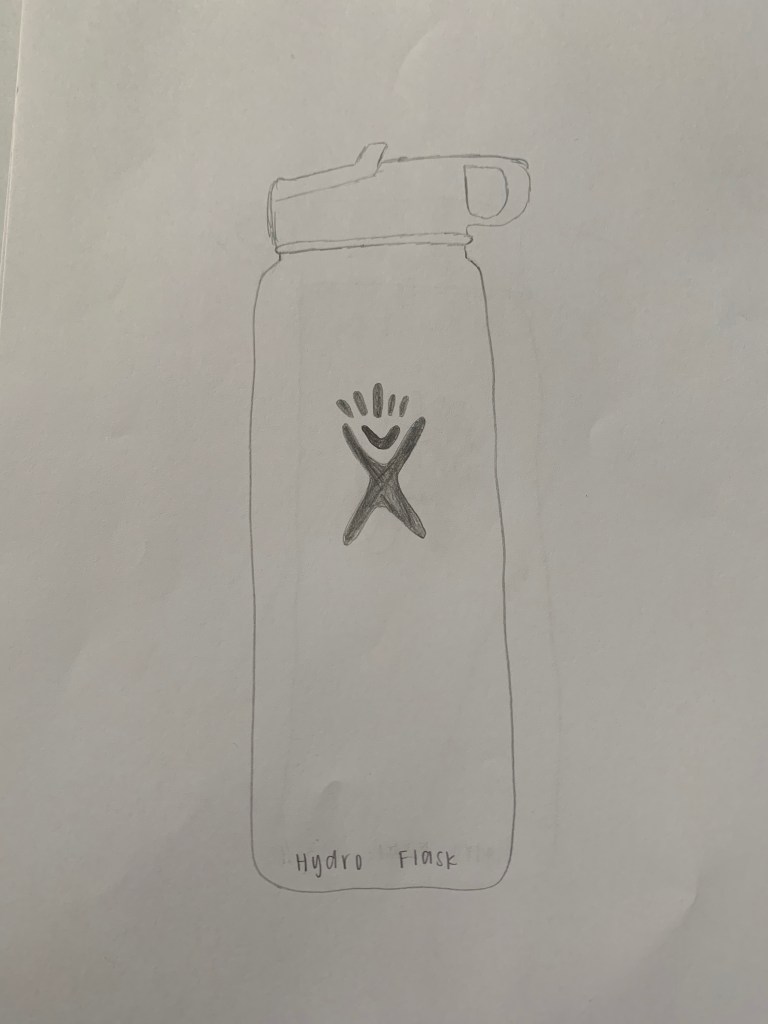
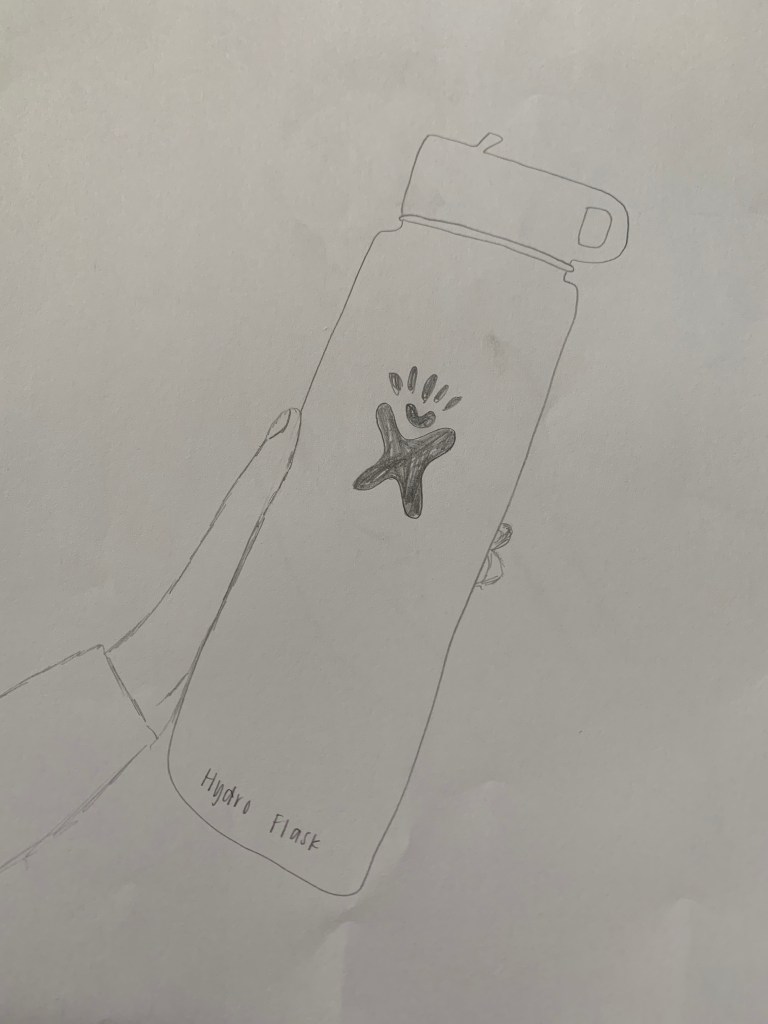
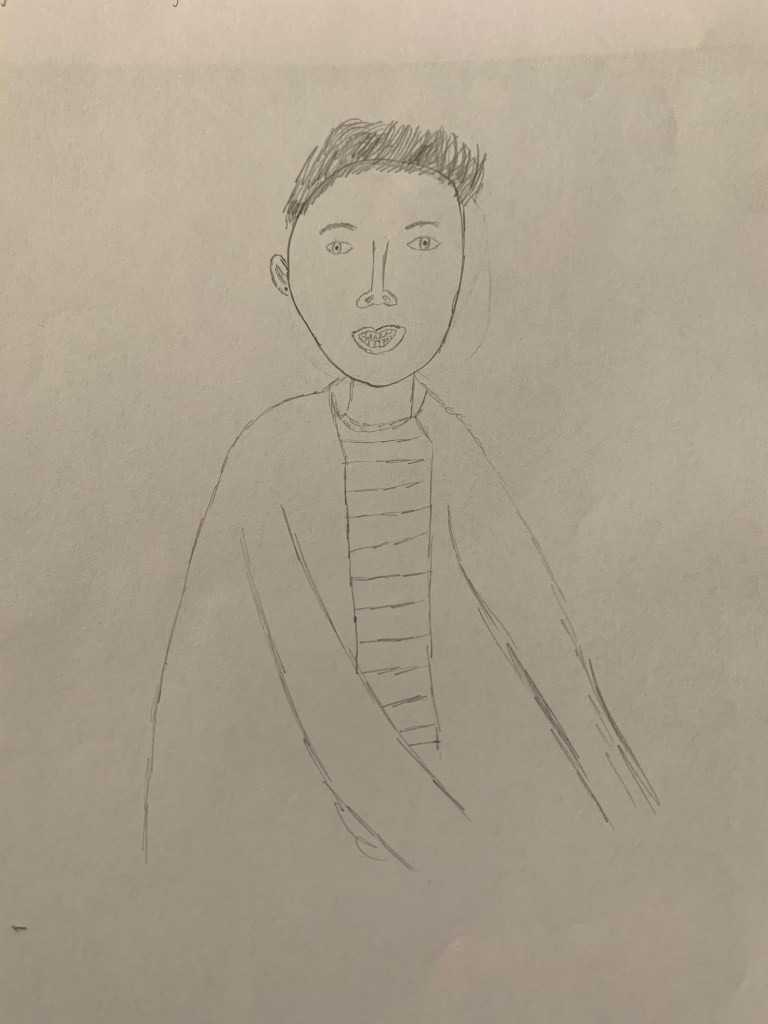
  1. I wouldn’t consider myself a very artistic person. But I did enjoy drawing my hydro flask because it was pretty simple. As I was drawing the trees, I noticed there were a lot of branches and small details that I had fun trying to successfully draw. The leaves were kind of frustrating to draw because I wanted it to look pretty similar to the tree I was drawing. The most frustrating thing to draw was another person from the class. I am not good at drawing people or faces but I took my time and did my best. I would definitely try again if I had the chance to draw these specific things.
  2. I think if I practiced for 100 and even 1,000 hours I would definitely get better. When I drew the tree the second time, I noticed an easier and more effective way of drawing the leaves. But I liked the branches on my first drawing. I think once an artist figures out what techniques they like, then from there you can practice to become better and better and what you are drawing.
  3. My major is Speech Language-Pathology. I want to be a speech therapist, specifically to help and work with kids who are special needs. I do think simple sketching would help in my major and my career. For example, in my phonetics class, we had to look at a drawing and listen to the way a kid was pronouncing the word, and had to write down what mistakes the kid was making. When working with kids, it’s easy to draw something real quick and see if they can pronounce the object that was drawn.
  4. I do think drawing is a language. It can be a way of self expression and allowing one to see someone’s feelings through art. Sometimes it’s hard for people to express how they’re feeling or what they’re thinking. Drawing allows them to still speak their mind but in a nonverbal way. It can allow someone to feel more confident in themselves.

Artist Conversation #1

Artist: Molly Champlin

Exhibition: Fog

Media: Watercolor and oil

Gallery: Gatov Gallery East

Website: http://mollychamplin.com

Instagram: mollychamplinart

Molly Champlin is a student in the School of Arts, Drawing and Painting program. She is a graduate student and is currently in her first year of working towards her MFA for drawing and painting. I think it’s amazing that she is able to get a MFA in doing something she is passionate about. Molly’s main focus for her art is to explore the disconnect from the physical world caused my technology. According to her website, she said, “My paintings and prints are intended to provide a critical perspective on a consumerist relationship with technology.

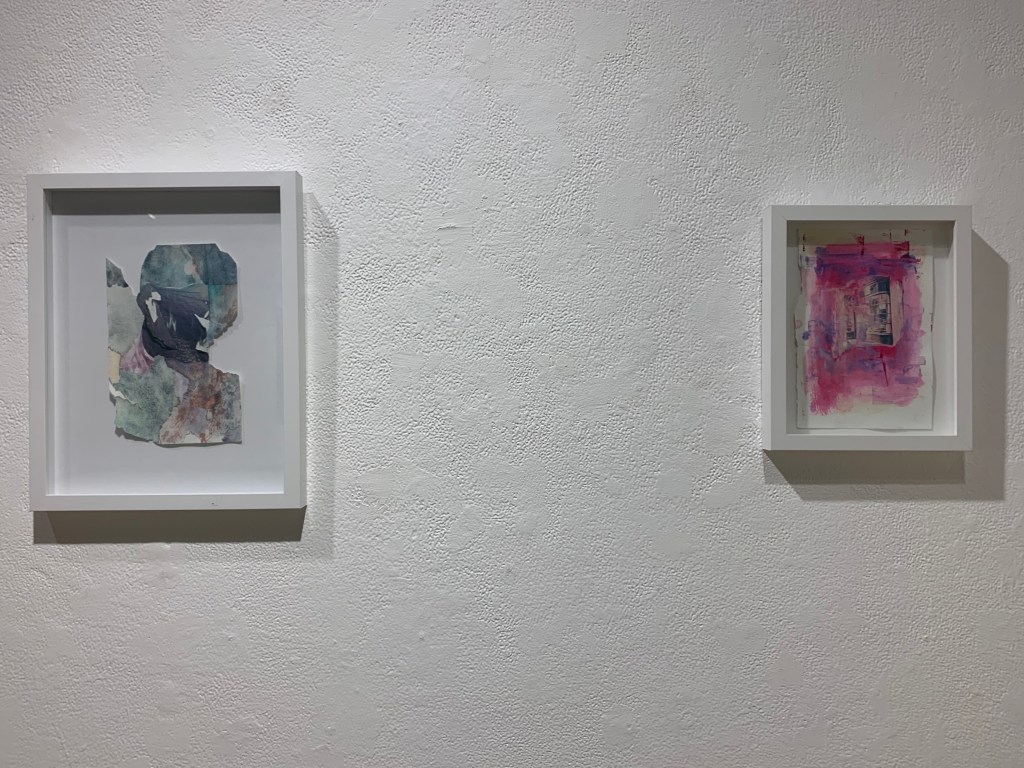
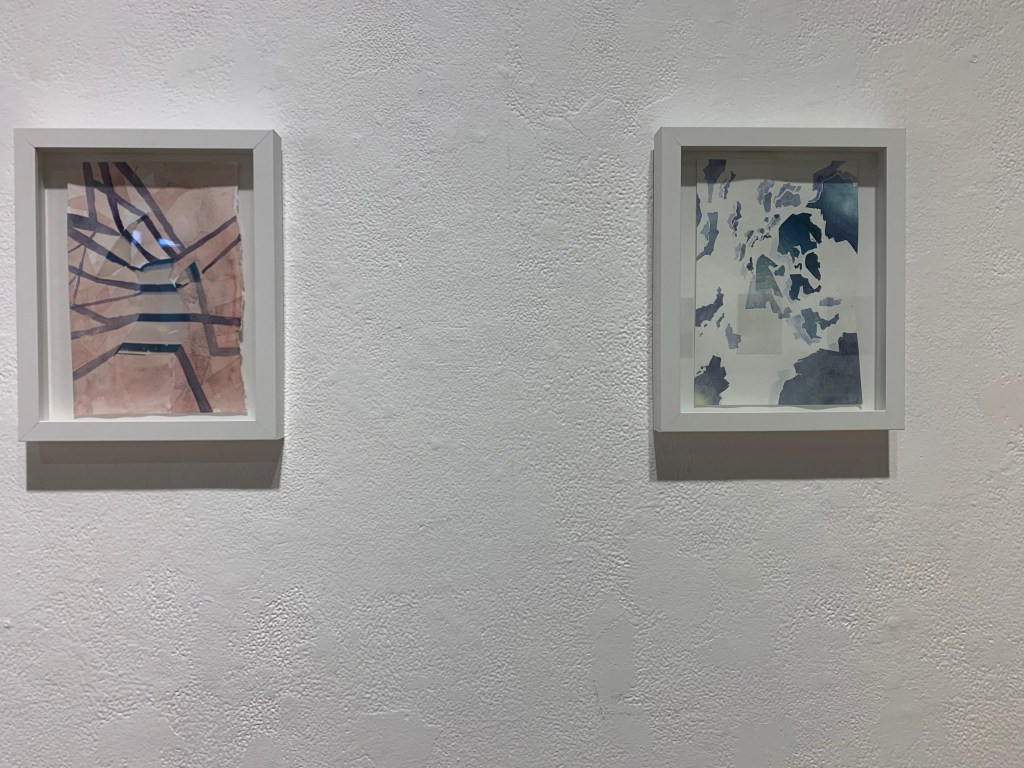
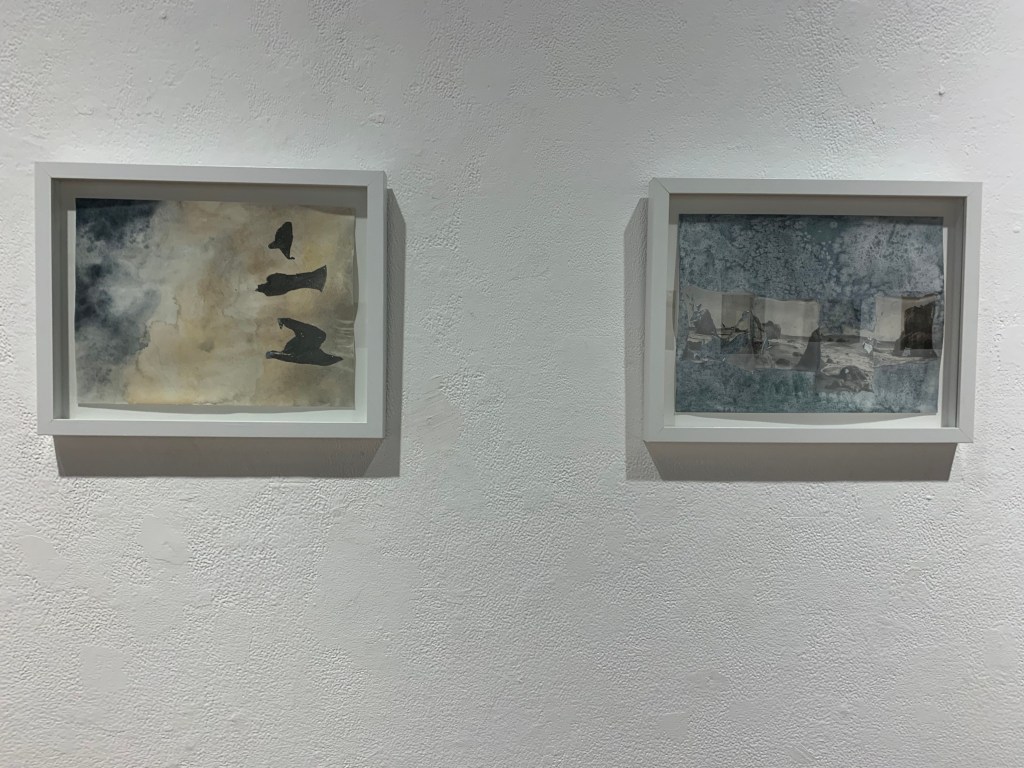
In the gallery, Champlin displayed several pieces of her work. After looking at her work, I noticed what qualities of form each one had. All of her paintings were on the smaller side. One of her paintings had distinct lines, but they were all different colors and had different shapes. The edges on some of her pieces were jagged, while others filled up all the whole frame. I liked the use of different shapes and spaces she created. She used a variety of colors in her painting. Most were a mix of muted pastel colors and black and white. I think her pieces are all a good size. There are some that are smaller than others, and I had to take a closer look at them, but it also allowed me to notice more details, rather than when I was viewing her pieces from a distance.

I talked with Champlin about her work, and I was able to get a better insight on her thought process while creating her pieces. She said that her paintings are about how the internet affects real and imaginary spaces. When I asked about what ideas she explores in her work, she said she combines contradictory elements, such as oil and water color, and nature and technology. I asked her what’s on her mind during the process of creating the paintings. Champlin said it depends on what steps is on. If she is doing the drawing and sketching, she thinks about what meaning are being created, but when she starts to paint, she’s finds herself responding more to color intuitive.

This was the first time I went to visit a gallery on campus. I was very pleased with the experience. When I first saw Champlin’s paintings, I wasn’t quite sure what the meaning was behind her pieces, but after talking to her and taking a closer look at them, I started to understand where she was coming from and what meanings she was trying to portray. I would definitely suggest to someone to visit the galleries and take a look at her paintings.

Wk 2- You Can Find Art Anywhere!

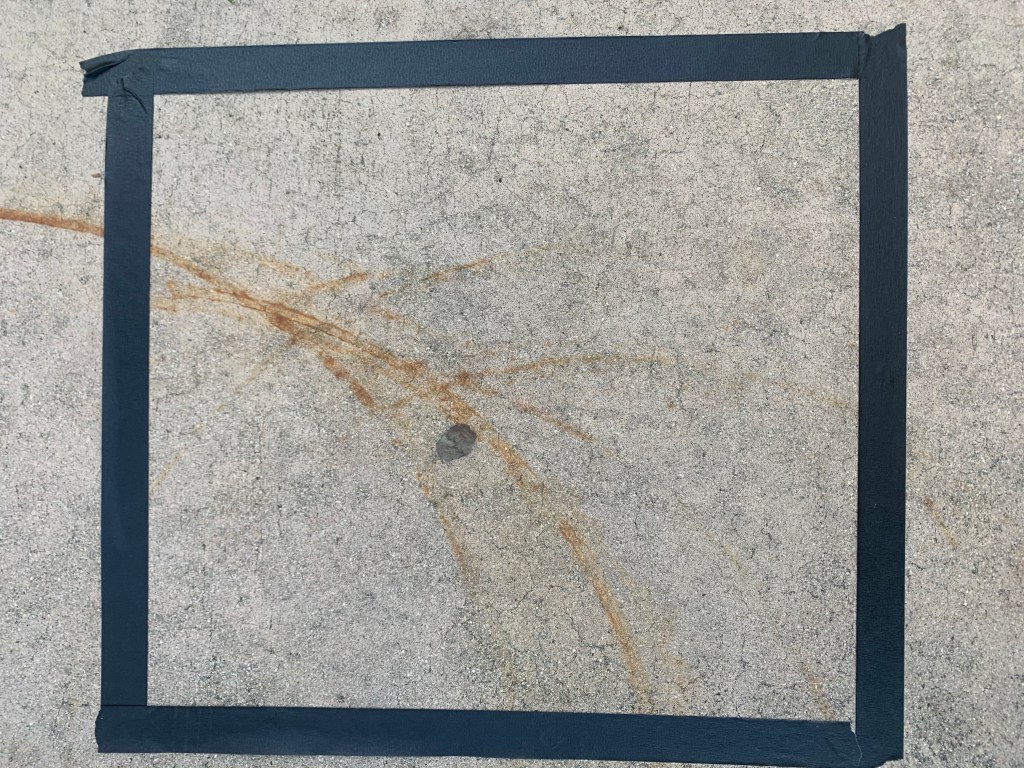
2. In the piece of art that my group discovered, the piece does have many elements of form. For instance, as seen above, there is color, which was created by a trash can sitting the same spot for a long time, and there are curved lines. My group liked the way the ground created texture, because the ground isn’t smooth, and it added other colors to the background. Our piece is on the smaller side. At first, we put tape around the entire circle, but then realized there were multiple circles that were overlapping, and we liked how the overlapping part looked because it was less of a defined shape. I appreciated the aesthetics of the piece. I find it very pleasant to look at. The brownish, rust color of the lines stand out from the background color of the ground. I like how the lines are curved and all headed in the same direction. With the content of our art piece, my group came up with something that our piece looked like. We said the gum, or whatever it was, that was stuck to the ground look like a pebble that was rolling down hills, and the hills in this case are the lines that the trashcan created. As seen in the picture, there are a couple lines that curve all the way to the bottom of the frame, and then there are lines of different levels that curve and stick out on the right side. This can be seen as even though someone might be going through a hard time in their life and feeling as though they are going down, there are alway paths along the way that will help someone though their rough patch.

3. Personally, I would’ve never considered our piece art before we put the rectangle around it. There are things on the ground that people walk past and never notice. The lines in our piece were made from a chemical reaction, because the trashcan was set in one place and started to rust, which created lines on the ground. I would have seen the lines as a mark that the trashcan made, and not necessarily a piece of art.

4. I think that the art will be art one the rectangle is gone, because after doing this activity, it made me realize that someone could end up walking across our piece without the rectangle and notice that there is a circle and overlapping lines on the ground. Once something is created, I think people tend to look at it a certain way.

5. I don’t think that art resides solely on the body of an object. An artist can make a statue or a painting, and yes that would be art. But the artist can also consider the location of the piece art as well. I do think that anyone can consider an object art, it all depends on their perspective. In my opinion, I would most likely consider an object art if it was made by someone, but after the activity we did, it made me realize that anything can be art if you want it to be.

6. As a former dancer, I definitely think that art can be something other than an object. With dance, someone is creating a piece. They are creating movement and choreography to create something special to them. The dance can portray a meaning or story behind it. Costumes, music, backdrop, the number of dancers in the piece, and the movement are all factors that a choreographer takes into consideration. It’s the same as when a painter has to think about what colors to use and the size of the sculpture or painting they are creating. If someone is putting their passion into creating something, such as a dance, then that shows that art doesn’t always have to be an object.

7. I definitely think the viewer has a big impact on art pieces. And their experience with viewing art can change their perspective and opinion on a piece. If someone is in an art gallery, the lighting and background music of the gallery might have an effect on the viewers mood and opinion of the way they view an art piece. So I do think that art also resides in the experience of the viewer, and I think mosts artists also take into consideration what kind of experience they want their viewers to have.

Wk 1- Art Experience- “Women’s Work” is also art

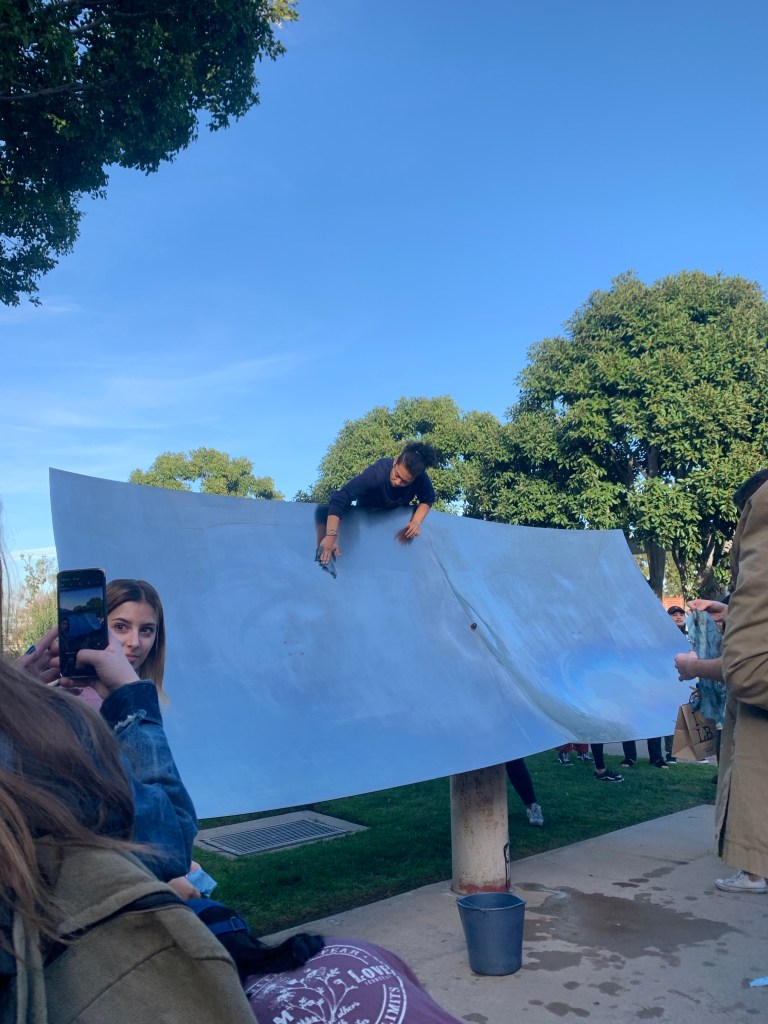
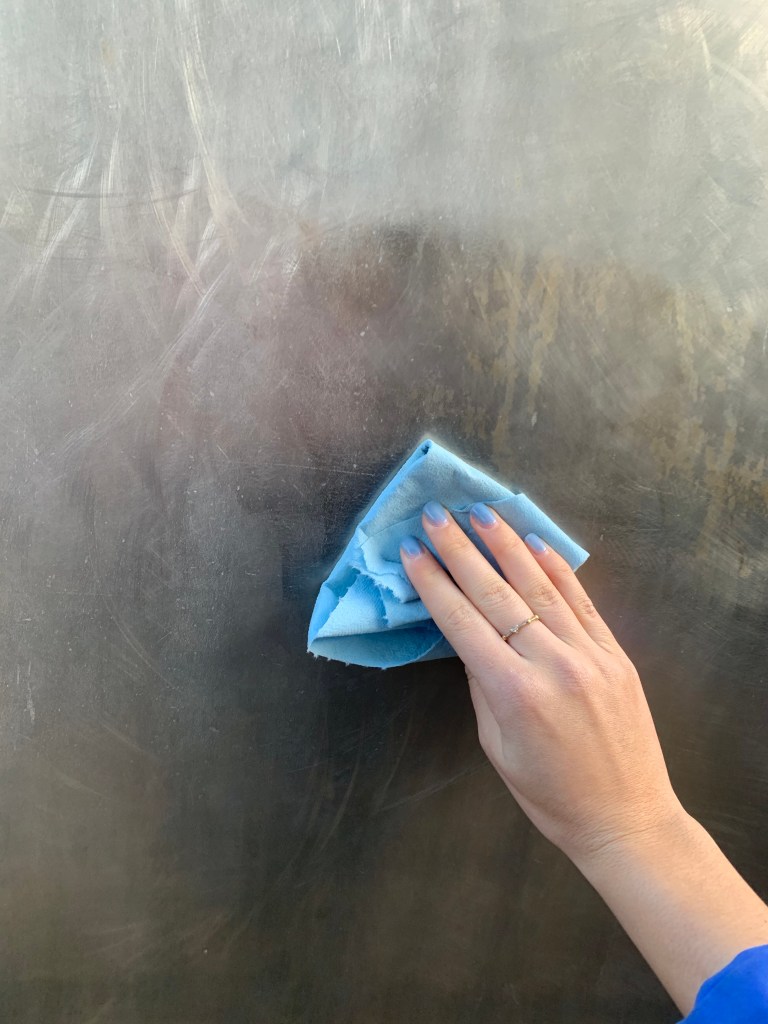
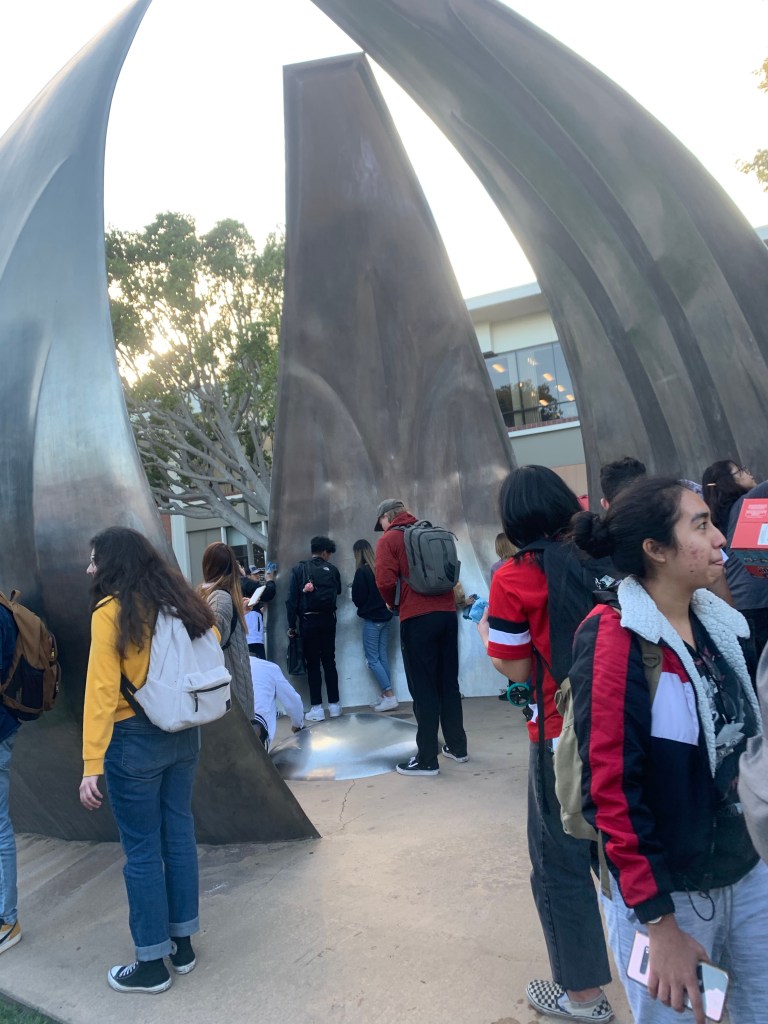
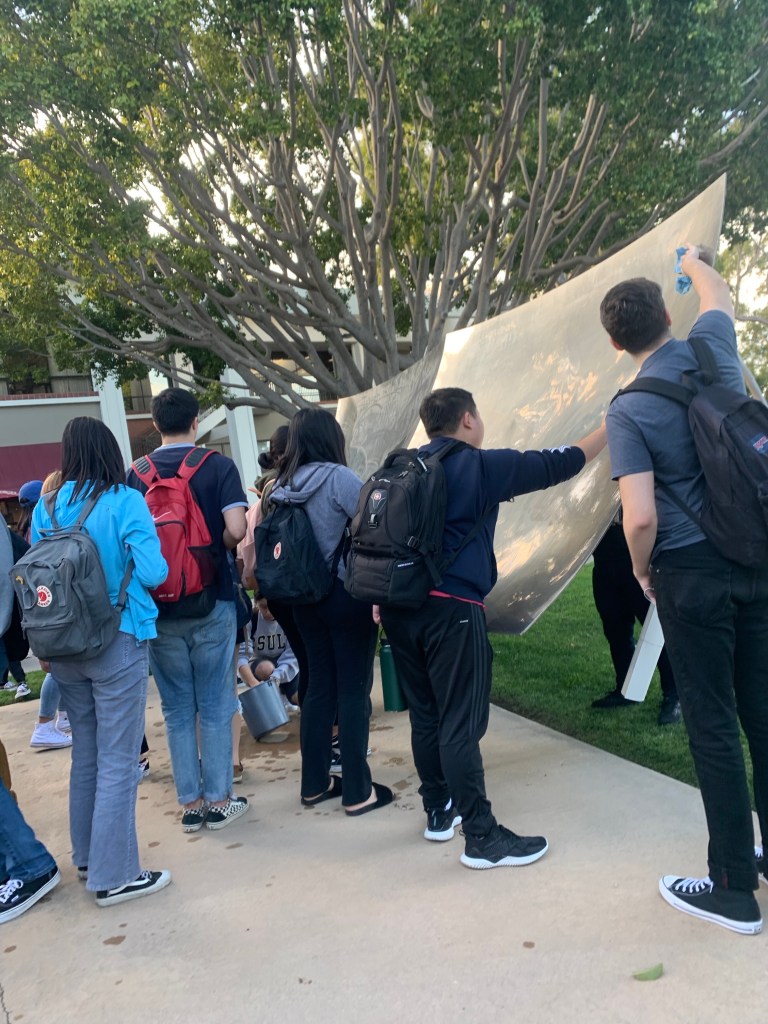
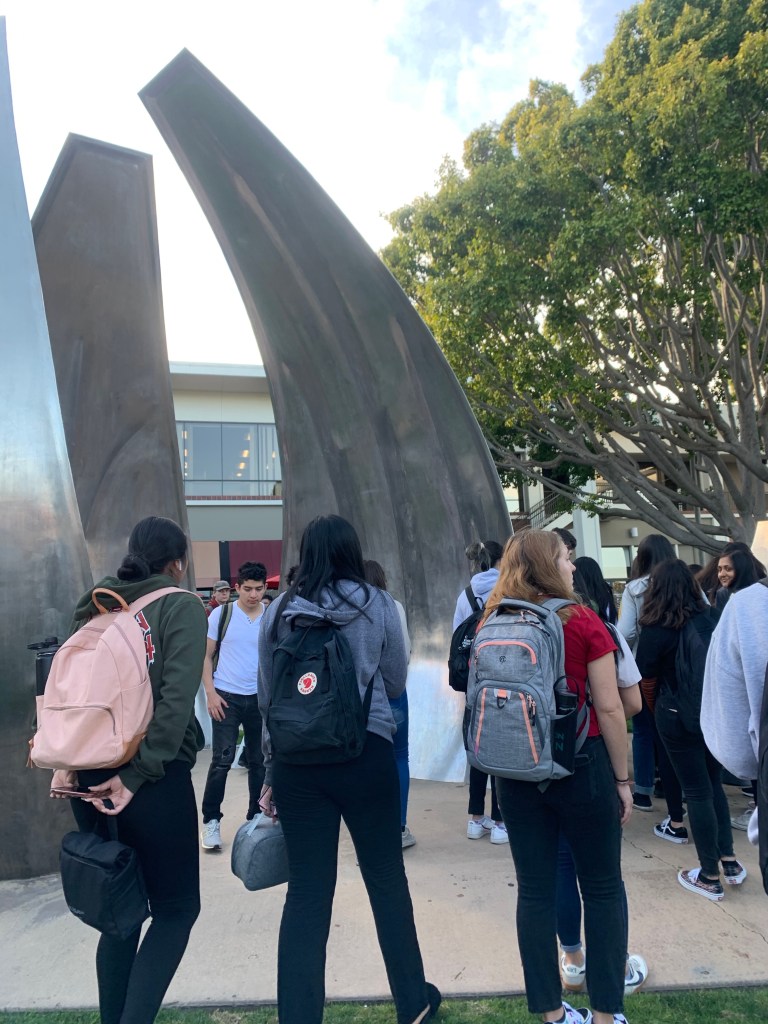
  1. Performing maintenance art was a great experience because it made me appreciate the art sculpture that is by the USU. Thousands of people walk past the sculpture everyday but don’t take the time to appreciate the work of art. This was someone’s creation, and it’s important that we respect their creativity and take care of it.
  2. In my opinion, I think Mierle Laderman Ukeles cleaning the steps of an art museum and and Richard Serra flinging molten lead agains walls is art but in certain ways. Ukeles is cleaning a museum that displays art, and it shows that she appreciates the museum as a whole. Serra flinging molten lead can look like art but at the same time, it can also look like it doesn’t represent art because it can look like he is trying to destroy something.
  3. If someone takes the time to make, create, or show appreciation for something, I consider that art. It doesn’t matter where you, whether it’s at an art museum, or being a janitor and cleaning at a school. What makes something art is when someone has the passion to work on something, whether it’s a project or cleaning. With that being said, I do think Mierle Laderman Ukeles’ maintenance art is considered art.
  4. From a vague perspective, I think a lot of things can be considered art. However, when it comes to art, most people will automatically think of drawings or paintings. If someone created a painting and put it on a canvas, I think it would be considered art, whether it’s displayed or not. A house painting or a painting in a museum is still a painting matter what. So overall, it doesn’t matter where a canvas with a painting on is it located. What matters is that someone still took the time and energy to create their own art.
  5. Mierle Laderman Ukeles’ and Jennifer Lopez’ work both made me realize that yes, women’s work is considered art. Women’s work is something that people take for granted. For example, some women are stay at home moms. Their goal is to have a family, and take care of their children. They put effort, passion, and love into doing women’s work, and for that reason, I think women’s work is an art.
  6. If I had to clean a star, it would be Tim McGraw’s. I love his music and he is the reason why I started listening to country music.

Introduce Yourself (Example Post)

This is an example post, originally published as part of Blogging University. Enroll in one of our ten programs, and start your blog right.

You’re going to publish a post today. Don’t worry about how your blog looks. Don’t worry if you haven’t given it a name yet, or you’re feeling overwhelmed. Just click the “New Post” button, and tell us why you’re here.

Why do this?

  • Because it gives new readers context. What are you about? Why should they read your blog?
  • Because it will help you focus you own ideas about your blog and what you’d like to do with it.

The post can be short or long, a personal intro to your life or a bloggy mission statement, a manifesto for the future or a simple outline of your the types of things you hope to publish.

To help you get started, here are a few questions:

  • Why are you blogging publicly, rather than keeping a personal journal?
  • What topics do you think you’ll write about?
  • Who would you love to connect with via your blog?
  • If you blog successfully throughout the next year, what would you hope to have accomplished?

You’re not locked into any of this; one of the wonderful things about blogs is how they constantly evolve as we learn, grow, and interact with one another — but it’s good to know where and why you started, and articulating your goals may just give you a few other post ideas.

Can’t think how to get started? Just write the first thing that pops into your head. Anne Lamott, author of a book on writing we love, says that you need to give yourself permission to write a “crappy first draft”. Anne makes a great point — just start writing, and worry about editing it later.

When you’re ready to publish, give your post three to five tags that describe your blog’s focus — writing, photography, fiction, parenting, food, cars, movies, sports, whatever. These tags will help others who care about your topics find you in the Reader. Make sure one of the tags is “zerotohero,” so other new bloggers can find you, too.

Design a site like this with WordPress.com
Get started